
The airplane crash in Galveston left six dead. Two surviving women show progress, while authorities investigate the causes.
The two women who survived the Galveston air crash that occurred last December 22 in the bay continue to show positive progress in their recovery, according to a Mexican nonprofit organization involved in the flight.
The accident, which shocked both the local community and authorities on both sides of the border, left six people dead, including a child, and triggered a federal investigation into the causes of the crash.
Update on the status of the survivors
The Michou y Mau Foundation, dedicated to transporting pediatric burn patients from Mexico to the United States, confirmed that Julia Aracelis Cruz Vera and Miriam de Jesús Rosas Mancilla are showing favorable progress.
Cruz Vera, mother of the child who died in the Galveston air crash, was taken off the ventilator and is in stable condition. The other survivor, Rosas Mancilla, who is a nurse, has also shown progressive improvement, according to the foundation’s report shared on social media.
Reunion with the rescuer who saved her life
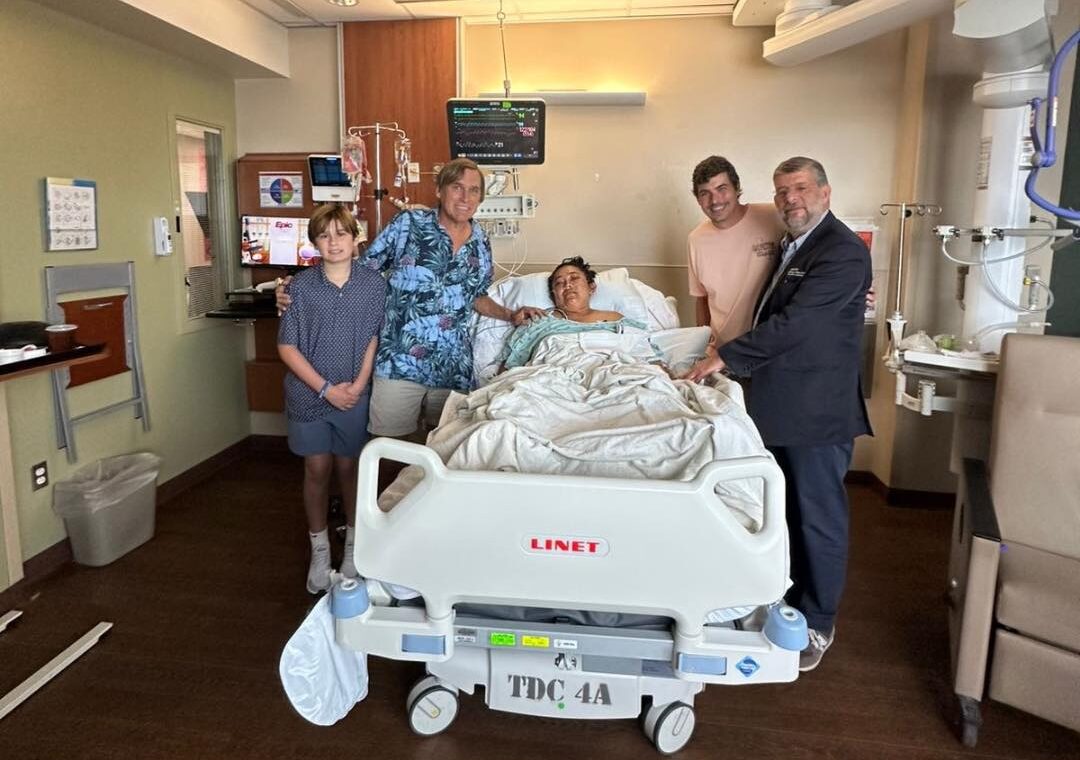
During the weekend following the accident, Cruz Vera reunited with Sky Decker, a Galveston resident who played a key role in her rescue. Decker was boating with his son and a neighbor when the aircraft plunged into the bay, and he helped pull the woman from the wreckage of the aircraft.
Virginia Sendel, president and founder of the foundation, attributed Cruz Vera’s life to Decker, highlighting the Galveston’s swift reaction at a critical moment.
This gesture has been widely recognized in the local community, where the Galveston air crash remains a topic of conversation due to the human impact and the citizen response it generated.
The flight and its medical mission
The aircraft involved was a Beech King Air 350i, a twin-engine turboprop plane owned by the Mexican Navy. The flight aimed to transport a pediatric patient to receive specialized care at Shriners Children’s Texas Hospital, located in Galveston.
The minor was identified by Mexican authorities as Federico Efraín Ramírez Cruz. His father traveled to Galveston during the weekend following the crash, accompanied by Dr. Yannick Nordin, the foundation’s medical director, to closely monitor the survivors’ condition and to complete the necessary procedures.
Fatal victims of the accident
Besides the child, authorities confirmed the deaths of five adults in the Galveston air crash. The Mexican Consulate General in Houston identified the victims as:
-
Dr. Juan Alfonso Adame González
-
Lieutenant Víctor Rafael Pérez Hernández
-
Lieutenant Juan Iván Zaragoza Flores
-
Seaman Guadalupe Flores Barranco
-
Lieutenant Luis Enrique Castillo Terrones
All of them were part of the crew or the medical team traveling on the aircraft.
Ongoing federal investigation
The cause of the crash is being investigated by the National Transportation Safety Board (NTSB), which has already begun analyzing the aircraft wreckage, flight data, and communications prior to impact.
Experts say that such investigations can take several months, as they review multiple factors such as weather conditions, the mechanical state of the aircraft, crew decisions, and possible technical failures.
Meanwhile, authorities reiterated that the Galveston plane crash does not pose an additional risk to regular air operations in the region, although it has revived the debate about international medical flights and safety protocols.
Impact on the Houston and Galveston communities
The accident has had a strong emotional impact on the greater Houston area and particularly on Galveston, a city accustomed to receiving medical flights and humanitarian missions.
Community organizations and local residents have expressed solidarity with both the families of the victims and the survivors, underscoring the binational nature of the tragedy and the cooperation between Mexico and the United States in medical care.
The Galveston air crash has also highlighted the often unseen work of medical foundations that perform complex transfers to save children’s lives, often under difficult conditions.