

From protein maps to designer molecules
Google’s DeepMind has built an AI that proposes drug candidates with minimal human input. It fuses two pillars: an advanced version of AlphaFold to predict protein structures and a new generator that designs novel molecules to bind them. Together, they create a tight loop from biological target to candidate chemical matter.
The system behaves like an autonomous experimental scientist, exploring billions of combinations in silico. It rapidly prunes weak options and refines promising leads via iterative self‑evaluation. Each cycle incorporates new feedback, nudging the model toward higher affinity and safer profiles.
Instead of mimicking what already exists, the generator proposes entirely new chemotypes. These structures seek advantageous interactions with protein pockets that traditional chemistry struggles to hit. The result is a cleverly constrained, yet highly creative, exploration of chemical space.
Why this approach matters
Traditional discovery is slow, costly, and burdened by high attrition. It can take more than a decade for a molecule to reach human trials, and most fail before they ever see the market. An AI‑driven search promises a steep reduction in front‑end time and design cycles.
By compressing ideation and screening, teams can interrogate vast biological questions in weeks rather than years. That acceleration broadens the feasible pipeline, including programs once deemed too risky to pursue. Critically, it shines on proteins long considered “undruggable”, where fresh molecular shapes may unlock new angles of attack.
Faster, cheaper design also reshapes the drug economics. Lower discovery spend can make therapies for rare diseases more viable, moving beyond blockbuster‑only incentives. That shift could bring meaningful options to patients left with few, if any, treatments.
Key potential impacts include:
- Shorter idea‑to‑lead timelines and fewer dead‑end paths
- Access to “undruggable” targets via novel molecular geometries
- Improved hit‑to‑lead quality through rapid, data‑driven iteration
- Greater viability for rare‑disease programs with tighter budgets
- Stronger hypothesis‑testing across broad literature and data streams
Can machines replace researchers?
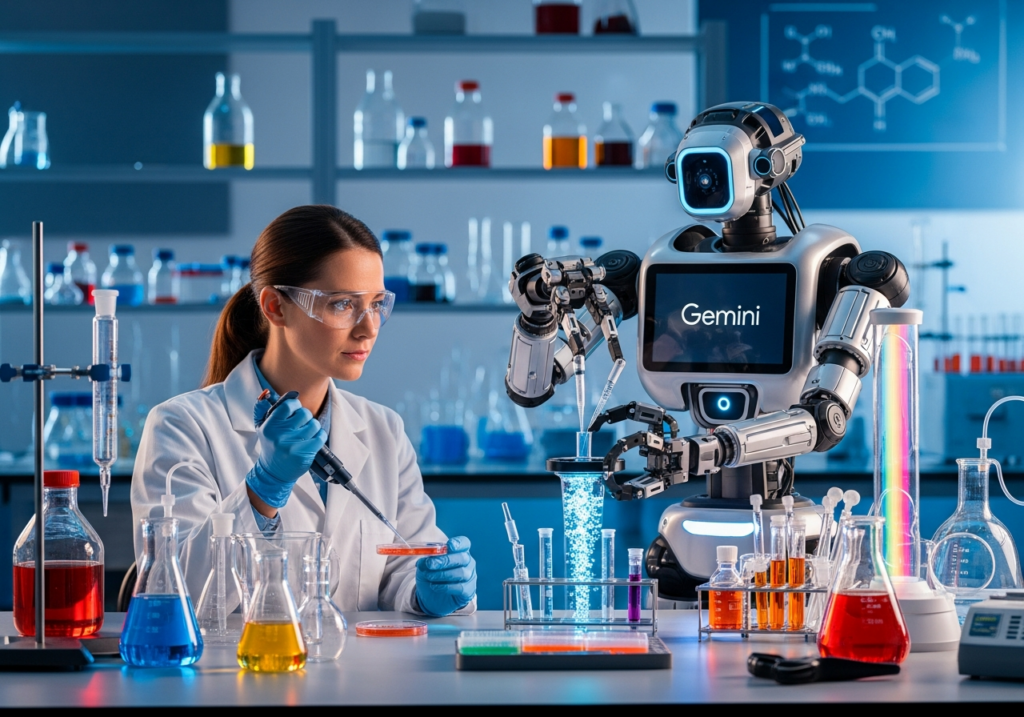
DeepMind now describes its system as a “co‑scientist,” not merely a tool. It proposes, critiques, and revises its own hypotheses while ingesting global biomedical literature. That self‑critical behavior is key to sustained progress, curbing overconfident model hallucinations.
Still, biology is messy, and the human body remains stubbornly complex. Simulations cannot fully capture emergent effects, off‑target risks, or real‑world variability. Clinical trials stay essential to validate mechanism, dose, and long‑term safety.
“As impressive as autonomous design may be, the decisive proof still happens in living systems,” notes a senior translational researcher. “The smartest path forward is a tight human‑AI partnership, not an either‑or choice.”
Momentum from lab to clinic
Google’s Isomorphic Labs is already lining up candidates for clinical testing. Partnerships with major pharma players signal strong industrial appetite and shared risk models. Silicon Valley’s software DNA is colliding with wet‑lab rigor, accelerating bench‑to‑bedside loops.
Regulators are also watching this new paradigm closely. Demonstrating reproducible benefits without compromising patient safety is paramount. Clear standards for model validation and data provenance will be central to broad adoption.
How the workflow actually scales
The promise hinges on disciplined end‑to‑end integration. AI‑generated molecules must flow into high‑throughput assays, structural biology checks, and medicinal chemistry refinement. Each experimental result becomes new training material, tightening the discovery flywheel.
Teams will need tools for model interpretability, so chemists can challenge or trust specific suggestions. Robust tracking of design rationale and assay evidence will keep decisions transparent and auditable. That transparency can shorten cross‑functional debates and speed critical choices.
What to watch next
Three pressure points will define real‑world impact. First, can AI consistently crack hard targets, not just textbook cases? Second, will early clinical readouts validate predicted efficacy and safety? Third, can the ecosystem align on fair access and ethical guardrails?
If those questions find convincing answers, drug discovery could enter a more programmable era. Human insight will still set the north‑star strategy, while AI handles vast search and rapid iteration. That division of labor could turn today’s scientific bottlenecks into tomorrow’s routine workflows.