
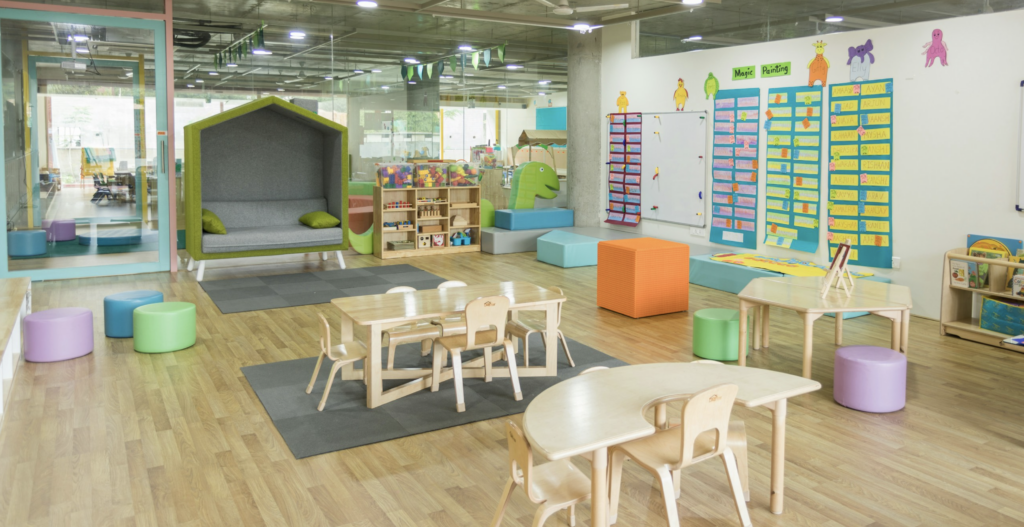
The new strategy aims to help child care businesses obtain state certifications, speed up permits, and connect more families with available services. The push comes as about 30,000 families remain on the waiting list to receive state support.
Harris County gave the green light to a new initiative to expand access to child care at a time when thousands of families continue waiting for help to pay for that service. The measure was approved on Thursday by Commissioners Court and is part of a broader effort to help local providers grow, meet higher quality standards, and serve more children who rely on state subsidies.
According to data cited in the public discussion of the issue, about 30,000 families in Harris County are on the waiting list to receive state child care scholarships through the Texas Workforce Commission. The figure appears in a recent study by the University of Houston and reflects a pressure that did not disappear after the pandemic, but continued to grow in the region.
The new initiative was pushed by Commissioners Lesley Briones and Adrian Garcia as part of the Harris County Coalition on Early Childhood Education and Care, a coalition launched in January from its offices. The goal is to open a pathway for more child care businesses to obtain the Texas Rising Star certification, a state quality rating system that can expand options for families receiving subsidies.
The goal is for more daycares to be able to accept families with state support
Texas Rising Star certification is not mandatory to operate a child care business in Texas. However, in practice it can make a difference for families who rely on state subsidies, because those subsidies cannot always be used with any provider.
That is one of the central points of the county’s strategy. If more businesses achieve that certification, more families with public assistance would have real options to find an available place. The problem is not only demand, but also the limited network of providers prepared to serve under that scheme.
The proposal approved this week is not presented as a new direct subsidy program, but as an accelerator to strengthen the sector’s capacity. Among the supports contemplated are measures to streamline operating permits and improve the connection between families and existing resources.
The county seeks to move already available resources before creating new costs
According to the information presented around the measure, the effort was designed as a low-cost strategy for the county. The idea is to use existing structures, coordinate local actors, and attract more state and federal resources to the region.
That approach also responds to the county’s recent track record on the issue. In 2023, Commissioners Court approved an early childhood education initiative to create up to 1,000 affordable child care spaces. As part of that program, providers who received county funds were required to raise teachers’ salaries to $15 per hour.
That plan was funded with temporary federal dollars from the pandemic era. When those resources began to run out, the debate emerged about how to sustain local investment in child care and early education training.
The debate returns after the failure of the tax increase in 2025
Last year, a proposal to put a tax increase on the ballot to sustain certain child care and educational training programs did not reach a key date to move forward. The discussion ended amid tensions within Commissioners Court and left those programs without that funding pathway, having operated with extraordinary pandemic money.
That precedent reappeared before Thursday’s vote. County Judge Lina Hidalgo expressed support for the new measure but noted that several of the included actions already existed and that the plan does not allocate significant funds to sustain them long term. She also revisited last year’s debate about the decision not to bring a fiscal mechanism to voters to extend certain programs.
With that, the issue again showed two planes at once: on one hand, there is general agreement that access to child care remains an urgent need; on the other, the dispute over how large the county’s intervention should be and where the money to sustain it should come from persists.
Pressure on the system is high among young children and eligible families
The figures explain why the issue keeps returning to the public agenda. Harris County has about 322,000 children aged four years or younger. Of that total, at least 166,000 meet the requirements for subsidized prekindergarten, according to the University of Houston study cited in the discussion.
That means more than half of the county’s young children are within the potential universe of families who might need support to access early education or child care services. With that scale, any bottleneck in subsidies, permits, certifications, or available slots ends up affecting thousands of households.
The new initiative attempts to intervene precisely in that part of the problem. Instead of immediately promising more local money to open new spaces, it bets on better organizing the existing network, helping more providers reach standards that make them eligible to serve subsidized families, and ensuring that resources already available go further.
It also appears poised to be part of the county’s legislative priorities, which opens the door to seeking additional support beyond the local budget. For now, the most concrete decision has already been made: Harris County approved moving forward with this working structure to expand access to child care and support sector businesses while the state waiting list continues to affect about 30,000 families.