
Montgomery County confirms its first human case of 2026. It is the second case reported this year in the Houston area, after one previously confirmed in Harris County.
Montgomery County confirmed its first human case of West Nile virus in 2026, amid the mosquito season in Texas.
The case concerns a woman in her 50s who lives in ZIP code 77355 and was diagnosed with West Nile virus neuroinvasive disease, a severe form of the infection, according to information from the Montgomery County Public Health Department confirmed by the Texas Department of State Health Services.
The Montgomery County case is the second reported this year in the Houston area. The first in Texas during 2026 was previously confirmed in Harris County, according to state health data cited by local authorities.
The mosquito season began in May and can extend through October
The mosquito season began in May and typically runs through late October, a period in which the risk of exposure to West Nile virus in Texas increases.
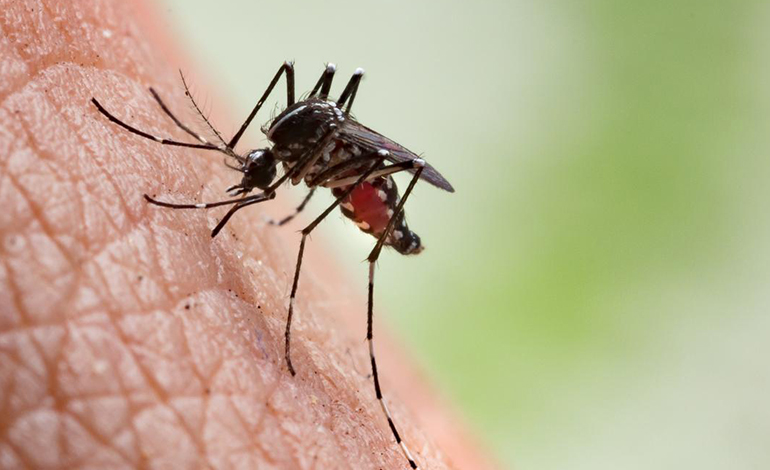
The virus is transmitted primarily by the bite of infected mosquitoes. Mosquitoes can acquire the virus by feeding on infected birds and then transmit it to people or other animals through bites.
The Centers for Disease Control and Prevention (CDC) identify West Nile virus as a mosquito-borne disease that can cause anything from asymptomatic infections to severe central nervous system disease.
In Texas, the virus has caused nearly 1,000 cases in the last five years and more than 100 deaths, according to figures from the Texas Department of State Health Services cited by health authorities.
Most people infected do not display symptoms
Most people who contract West Nile virus do not develop symptoms. The CDC notes that about 80% of those infected do not show signs of illness.
Around 20% may develop a mild illness. Symptoms can include fever, headache, body aches, joint pain, vomiting, diarrhea, or a rash.
In most mild cases, recovery occurs without hospitalization, though fatigue and weakness can last for weeks or months.
Severe illness is less common, but can affect the brain, the membranes surrounding the brain and spinal cord, or the nervous system. The CDC notes that less than 1% of infected people develop severe illness.
Galveston County approves new precinct map despite criticisms
Older adults and people with medical conditions are at greater risk
The risk of severe illness increases with age. The CDC notes that people 65 years old or older are more likely to develop neurologic illness than younger people.
There is also a higher risk among people with chronic medical conditions, such as cancer, diabetes, high blood pressure, or kidney disease.
Symptoms of severe illness can include high fever, severe headache, neck stiffness, confusion, tremors, seizures, muscle weakness, vision loss, numbness, or paralysis.
Immediate medical care is advised when signs such as high fever, neck stiffness, muscle weakness, confusion, or tremors appear. There is no specific medication to treat West Nile virus; in severe cases, medical care focuses on hospital support and the management of complications.
Prevention focuses on avoiding mosquito bites
Prevention is based on reducing exposure to mosquitoes, especially during the months of highest activity.
Protective measures include using EPA-registered repellents, covering the skin with appropriate clothing when mosquitoes are active, and removing standing water around homes, yards, and outdoor areas.
Standing water can become a mosquito breeding ground. Containers, pots, buckets, birdbaths, tires, outdoor toys, or any object that holds water can facilitate mosquito reproduction.
In Montgomery County, local mosquito control programs conduct surveillance, sample collection, and treatment in areas where positive activity is detected, according to county public health information.
The CDC updates data during the summer and fall
The CDC updates West Nile virus data every one to two weeks during the summer and fall season, between June and December.
The agency warns that national data can be delayed because it depends on reports submitted by state and local authorities. For this reason, local or state health departments may have information more up-to-date than federal maps.
The Montgomery County case was confirmed by the Texas Department of State Health Services and reported by local health authorities. The case adds to the previously confirmed Harris County case during 2026.
