
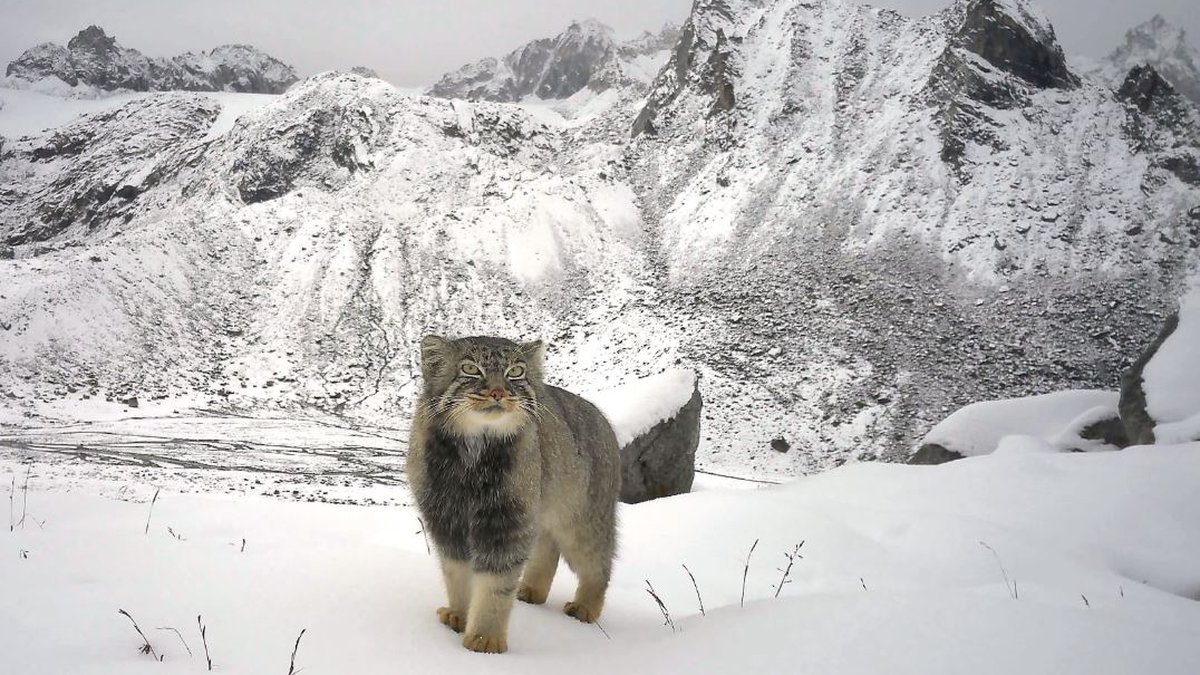
A single photograph has left wildlife experts and nature lovers in awe. An ultra-rare Pallas’s cat, also known as the manul, has been photographed in the Himalayas at an altitude approaching 5,000 meters. The image offers a rare glimpse of one of the world’s most elusive wild cats in one of Earth’s harshest environments.
A sighting few ever witness
Pallas’s cats are famously difficult to observe. Solitary, discreet, and perfectly adapted to rocky landscapes, they are rarely seen even by seasoned researchers. Capturing one on camera at such an extreme altitude is considered exceptional.
The photo was reportedly taken using a remote camera trap installed as part of a long-term biodiversity monitoring project. When scientists reviewed the footage, they were stunned by what appeared on screen.
“Seeing a Pallas’s cat at this elevation is extraordinary. It confirms just how adaptable — and how little understood — this species still is,” said one wildlife biologist involved in the project.
A master of survival at extreme altitude
The Pallas’s cat is uniquely equipped for life in cold, oxygen-poor environments. Its thick, dense fur, compact body, and low-set ears help conserve heat and reduce exposure to freezing winds. These traits allow it to survive where few predators can.
At nearly 5,000 meters above sea level, temperatures can drop dramatically, and prey is scarce. The image suggests that the species may roam higher than previously documented, expanding what scientists believed to be its known habitat range.
Why this photograph matters
Beyond its visual impact, the image carries significant scientific value. It provides:
-
evidence of high-altitude habitat use
-
insight into the species’ ecological flexibility
-
new data for conservation mapping
Pallas’s cats are currently classified as near threatened, with populations under pressure from habitat loss, climate change, and declining prey numbers. Each confirmed sighting helps refine protection strategies.
The Himalayas: a refuge still full of secrets
The Himalayas remain one of the least explored regions for wildlife research. Steep terrain, extreme weather, and remoteness mean that many species are under-documented.
This discovery reinforces the idea that these mountains still shelter animals that science is only beginning to understand — and that major findings can come from a single image.
A symbol of fragile wilderness
Conservationists see the photo as both inspiring and cautionary. It highlights the resilience of wildlife, but also the vulnerability of ecosystems facing rising temperatures and human expansion.
Protecting high-altitude habitats is increasingly seen as critical, not only for iconic species like the Pallas’s cat, but for entire ecological networks that depend on cold-mountain stability.
A moment frozen in time
The photograph shows the cat standing calmly against a backdrop of snow and rock, its wide eyes and thick fur perfectly blending into the landscape. It is a reminder that even in the most remote corners of the planet, life persists quietly, unseen.
For scientists and nature lovers alike, the image is more than beautiful — it is a rare confirmation that the wild still holds surprises, waiting patiently to be discovered.
