
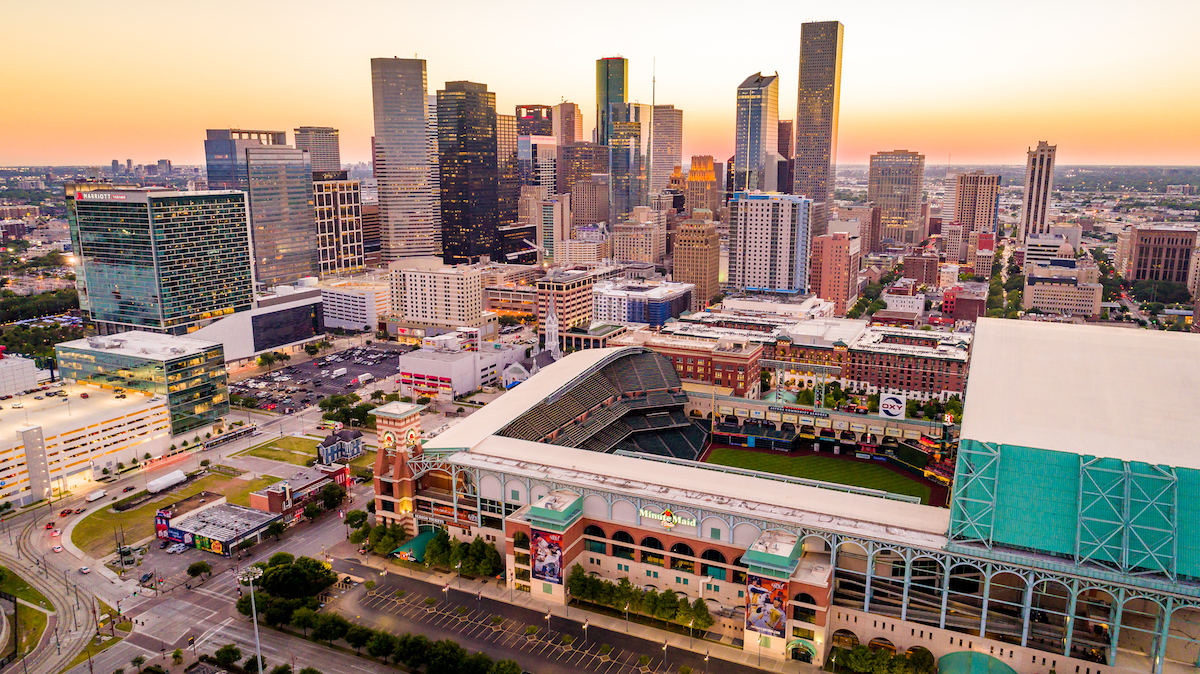
The Houston metropolitan area rose to sixth place nationally for ozone air pollution in the 2026 State of the Air report. Harris County averaged 43.3 days per year with unhealthy air.
Houston once again ranked among the metropolitan areas with the worst air quality in the country, according to the American Lung Association’s annual State of the Air 2026 report. The report placed the metropolitan area sixth nationally for ozone pollution, a position worse than last year, when it held seventh place.
The ranking is based on the average of 43.3 days per year with unhealthy air in Harris County. That level gave the county an F grade and marked a deterioration from the previous record of 34.8 days. In year-round fine particle pollution, the region remained in eighth place nationally, with levels above federal standards.
Harris County logged more days with unhealthy air
The new report shows a setback in one of the region’s most sensitive indicators: the days when air quality falls to unhealthy levels for the population. Harris County rose from 34.8 to 43.3 days per year in that category, an increase that pushed the Houston area higher among the worst in the country for ozone pollution.
That uptick places the region once again at the center of the environmental problem in Texas. Ground-level ozone forms when pollutants emitted by vehicles, industries and other sources react with heat and sunlight. In a metropolis with heavy traffic, industrial activity and high temperatures for much of the year, the result is typically more frequent periods of poor air quality.
The report also kept Houston among the areas with the worst year-round fine particle pollution. This indicator measures microscopic particles that can penetrate deeply into the respiratory system and linger in the air for extended periods.
The national report detected deterioration across much of the country
The American Lung Association noted that ozone pollution worsened in broad areas of the United States over the past two years, after a period in which progress had shown sustained reductions. The report describes this shift as a sign that previous progress remains fragile.
Nationwide, 44% of the population, more than 152 million people, lives in places with unhealthy levels of ozone or particle pollution. The report attributes part of that outlook to more severe climate conditions, including extreme heat, droughts, and wildfires, which make it harder to control pollution.
In Houston, those conditions do not occur in a vacuum. They are added to a highly car-dependent urban structure, the weight of the industrial corridor and an environmental oversight that various local analyses have pointed out as insufficient relative to the size and growth pace of the region.
Read also: Houston mayor’s podcast cost up to $60,000 in public funds
Children, the elderly, and people with preexisting conditions face greater risk
The effects of air pollution are not distributed evenly. The report warns that exposure to unhealthy levels increases the risk of asthma attacks, heart problems, and premature death, with greater impact on children, the elderly, and people with preexisting medical conditions.
In Houston, those risks coexist with everyday realities: long hours on the road, intense heat for much of the year, and communities living near industrial corridors or high-traffic areas. The increase in unhealthy days not only alters an annual statistic; it also increases how often sensitive residents may experience episodes of worse air quality.
That scenario makes monitoring coverage and public tracking of pollution levels even more relevant. The same report suggests that improving the network of air quality monitors across all counties is one of the necessary measures to respond more accurately to the problem.
Regulatory rollbacks and industrial expansion increase pressure and air pollution
In addition to the recent ozone uptick, the report warns that federal regulatory changes could affect decades of progress. Among them is the revocation of the 2009 finding of danger in February and the weakening of emissions standards for power plants and vehicles.
Another growing pressure is data centers. Harris County has around two dozen active, with several more in the pipeline. The report identifies the rapid expansion of these facilities and their dependence on fossil fuels as a possible factor in local pollution, though it does not quantify their emissions in this analysis.
The observation comes as Houston continues to grow as an industrial, logistics and technology hub. That combination broadens the conversation about which sectors are adding load to the regional air and how that impact should be measured going forward.
For now, the 2026 report leaves a concrete conclusion for the Houston area: the region worsened in ozone pollution, remained among the worst in the country for fine particles, and ended the year with a higher average number of days with unhealthy air in Harris County.