
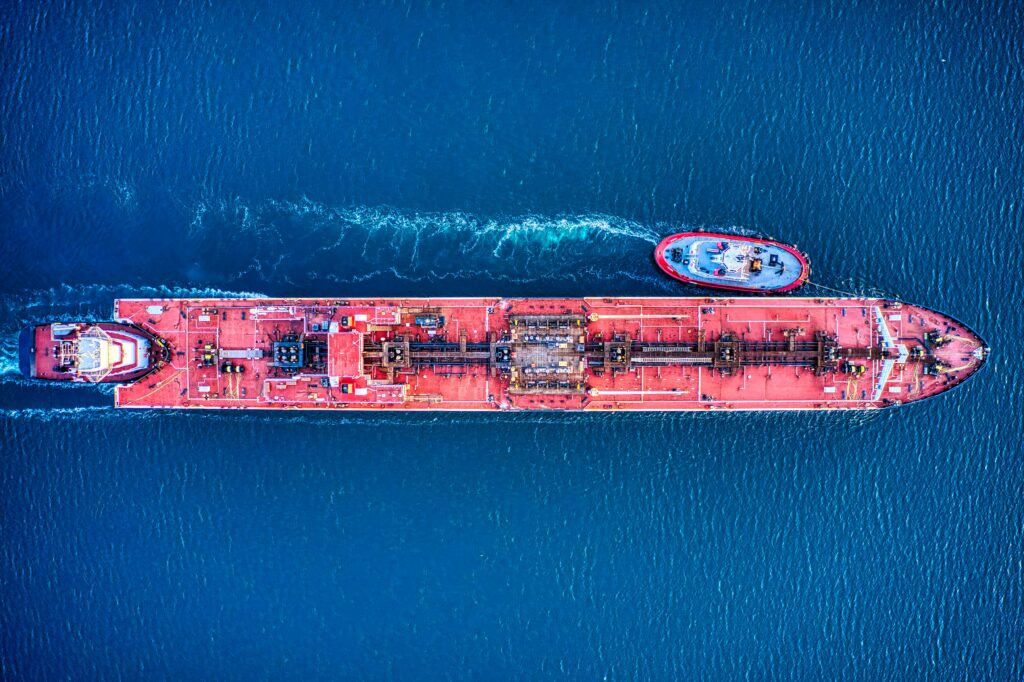
A Venezuelan oil tanker in Galveston remains detained off the Texas coast amid sanctions, legal disputes, and terrorism accusations.
For weeks, a Venezuelan oil tanker in Galveston has remained detained off the Texas coast, visible from shipping routes near the island and very close to key refineries in the Houston area. Its presence is neither accidental nor temporary: it is the result of an international conflict that blends sanctions, terrorism accusations, and a complex legal debate about jurisdiction in international waters.
The vessel, seized by U.S. authorities in early December, is part of a series of seizures that the Trump administration has described as an offensive to enforce sanctions related to Venezuela. The Venezuelan government, by contrast, has described these actions as acts of “piracy.”
Why is there a Venezuelan oil tanker in Galveston?
The ship, identified as Skipper, was detained on December 10 and has since remained anchored offshore, near facilities capable of processing Venezuelan crude. This case is joined by two other ships recently seized and another one that was detained and later released, all connected to a maritime network that the United States says violated international sanctions.
According to federal officials, these oil tankers carried crude allegedly destined to fund groups deemed terrorist organizations or sanctioned countries. Authorities continue to track more than a dozen additional vessels that would be part of this operation.
The oil that no one can touch
One of the big mysteries is what will happen to the cargo. Although there has been speculation about the possibility of transferring the oil ashore using smaller vessels, experts say this option is unlikely.
The main issue is the ownership of the crude. Energy and geopolitics analysts explain that part of the seized oil could belong to third countries, including Russia, China, and Iran. Even under sanctions, these countries retain legal rights over their assets, which complicates any attempt at permanent confiscation.
Interfering with those rights, experts warn, could affect not only the United States’ diplomatic relations but also the stability of the global energy supply chain, at a moment when the oil market already faces tensions.
Venezuelan oil tanker in Galveston: the so-called “dark fleet”
The case of the Venezuelan oil tanker in Galveston has also drawn attention to what is known as a “dark fleet.” These are vessels that attempt to evade sanctions by sailing under false flags, changing names, or disabling tracking systems.
This kind of practice makes tracing the real ownership of ships and their cargo a slow and complex process. Determining who the legitimate owner of the oil is can take months, or even years, due to cross-border contracts and unclear shipping records.
Is the seizure legal?
From the perspective of international law, the case moves in a gray area. Both Venezuela and Russia have denounced the seizures as piracy, and the Venezuelan government recently approved a law that penalizes blockades and acts of this type with penalties of up to 20 years in prison.
However, to date, no international court has declared the United States’ actions illegal. Under the UN Charter, assets seized in piracy should be returned, but that legal framework only applies if an international authority formally recognizes that piracy is involved, which has not occurred.
From the American perspective, the procedure has followed due process. Court documents indicate that federal agents sought prior authorization before acting in international waters, something a federal judge highlighted as a sign of respect for the rule of law.
Venezuelan oil tanker in Galveston and the terrorism accusations
The Department of Justice contends that the Skipper, under previous names and owners, was involved five years ago in operations that benefited Hezbollah and Iran’s Quds Force, both designated by the United States as terrorist organizations.
A federal judge in Washington, D.C., approved the seizure request in November. While the court decides the final fate of the ship and its cargo, both will remain under judicial jurisdiction.
There is a possibility that the ship and the oil could be released on bail or sold, but any decision will require a clear legal ruling on who has rights to the assets or to the proceeds of an eventual sale.
Venezuelan oil tanker in Galveston: what comes next?
Although the conflict is international, its local impact is evident. The prolonged presence of a Venezuelan oil tanker in Galveston once again places the Houston area at the center of the global energy debate. Texas continues to be a key player in refining and trading oil, even when it involves crude from sanctioned countries.
For now, the Venezuelan oil tanker in Galveston remains unmoved, turning into a floating symbol of how geopolitics can be anchored, literally, off the Texas coast. Resolving its situation will not be fast, and experts agree that the legal process could extend over a long period.
