
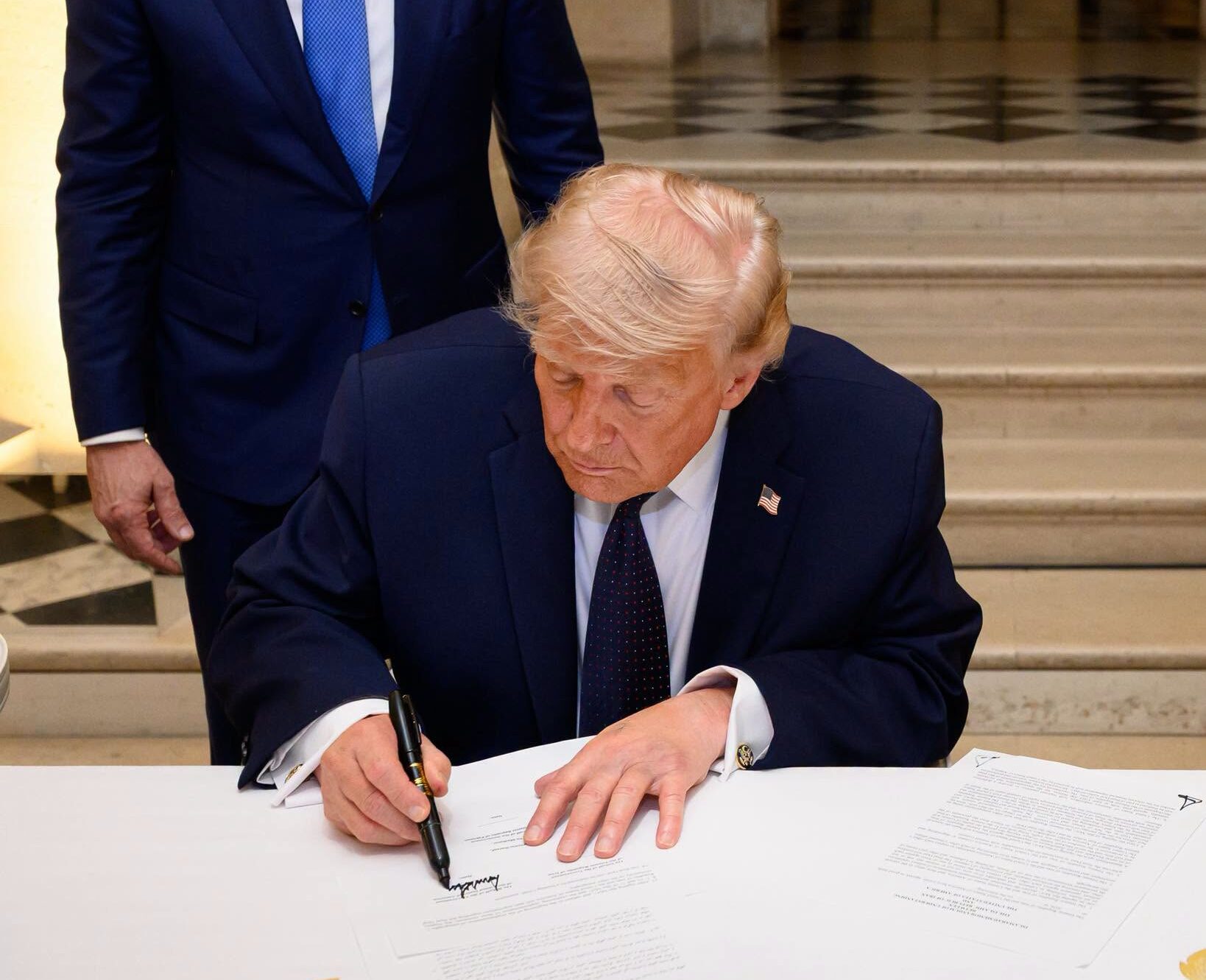
Washington. — The President of the United States, Donald Trump, has formally announced a historic framework peace agreement with the Islamic Republic of Iran, designed to tentatively end fifteen weeks of a devastating armed conflict in the Middle East, and with the announcement of finally opening the strategic Strait of Hormuz to allow the flow of fuel.
The bilateral understanding, mediated by Pakistan and Qatar, establishes an immediate ceasefire on all fronts and draws the legal path for a formal sixty-day truce.
The official signing of the Memorandum of Understanding would take place this Friday, June 19, in Geneva, Switzerland, opening an intensive window of technical negotiations aimed at dismantling Tehran’s atomic ambitions and stabilizing the region’s security definitively.
The global implications of this announcement have generated immediate relief in global markets and international geopolitics.
In economic terms, the most momentous consequence is the total and guaranteed reopening of the Strait of Hormuz, a strategic channel through which about a fifth of the world’s oil and natural gas trade flows. After months of American naval blockades and Iranian reprisals that choked energy supply and spiked inflation in the West, the restoration of free passage through this route triggered an immediate collapse in international crude prices and a historic rally in the world’s major stock markets.
In military and strategic terms, the agreement aims to permanently deactivate the fighting of pro-Iranian militias in the region. Although Iran’s Foreign Ministry has celebrated the inclusion of a comprehensive ceasefire that covers Lebanese territory and Hezbollah operations, its implementation faces severe tensions regarding its viability. Israel, which actively participated alongside Washington in the initial aerial offensive against Iran’s military capabilities, is not formally part of this bilateral pact.
Prime Minister Benjamin Netanyahu has voiced firm resistance to suspending his operations against the Shiite group in southern Lebanon, arguing that the Trump agreement compromises the essential security interests of his nation by not fully neutralizing the atomic threat posed by its historic rival.
Finally, the pact opens a complex sixty-day diplomatic challenge in which the dismantling of Iran’s nuclear program and the easing of international economic sanctions will be defined.
Washington demands the full dilution and exit of the country of all stockpiled highly enriched uranium accumulated by Tehran. In return, the Iranian regime urgently seeks the gradual release of twenty-five billion dollars in financial assets that remain frozen abroad, as well as the subsequent ratification of the final agreement through a United Nations Security Council resolution.
This diplomatic framework reconfigures the balance of power in the Persian Gulf, easing pressure on neighboring Arab states and marking a drastic shift in U.S. foreign policy.
