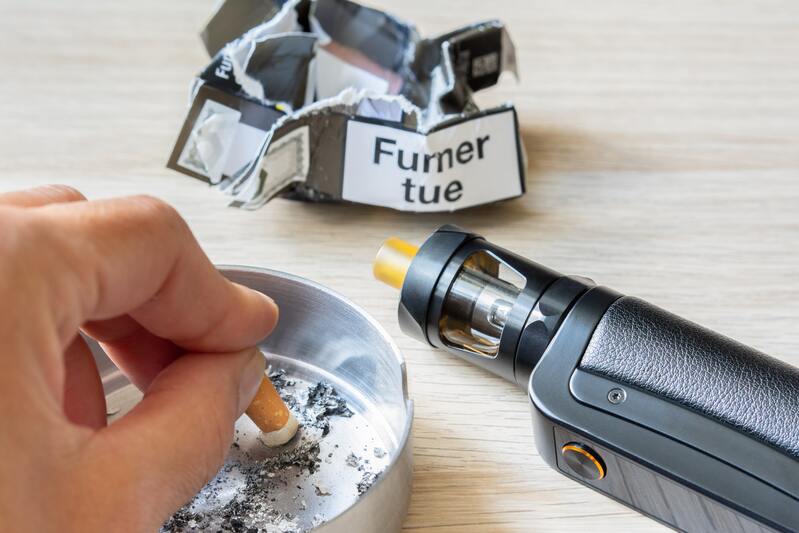
Switching from smoking to vaping promises less harm, yet quitting is rarely simple. Many people treat e‑cigarettes as a bridge, but end up maintaining a habit. Evidence suggests vaping can help some smokers quit, though results depend on consistency. The biggest gains come when cigarettes are abandoned, not when the two are combined.
What the data actually shows
Randomized trials indicate nicotine vaping can outperform single‑form NRT, especially with behavioral support. Still, population surveys show widespread dual use, blunting expected benefits. Recent French data suggest nearly half of daily vapers also smoke, underscoring a persistent link. In short, vaping can be effective, but only when it fully replaces cigarettes.
Why so many vapers keep smoking
Nicotine dependence remains powerful, even without tobacco combustion. E‑cigarettes deliver nicotine efficiently, which may sustain the addiction while lowering smoke‑related toxins. For some, that balance reduces cigarette intake, but it can also entrench two routines.
Smoking is steeped in learned cues, social rituals, and stress‑relief myths. A drink with friends, a work break, or late‑night cravings can reignite the classic cigarette. When vaping fails to meet those situational needs, people slip back to what feels familiar.
Practical barriers also matter, such as mismatched nicotine strengths, harsh throats hits, or inconvenient devices. Without early troubleshooting, users drift toward “just one” cigarette, which too often becomes several. Small frictions can derail big intentions, especially in high‑risk moments.
Health stakes of dual use
Cutting cigarettes reduces exposure to toxins, but does not erase smoking‑related risk. Even low‑level smoking raises cardiovascular and cancer hazards, particularly over many years. Dual use keeps combustion in the picture, limiting the health gains of vaping.
Who seems to benefit most
People who switch completely, then taper nicotine, see the largest risk drops. Success rises with structured support, clear goals, and steady device‑liquid adjustments. Those who only “add” vaping to their routine often plateau, stuck in prolonged dual use.
“Vaping helps most when it becomes a complete **replacement**, not a casual **addition**.”
How to maximize your chances
- Pick a firm quit date for all cigarettes, and treat vaping as your sole source of nicotine.
- Choose adequate nicotine strength to prevent early withdrawal and urgent cravings.
- Combine vaping with behavioral support, whether counseling, apps, or peer groups.
- Avoid trigger situations at first, and engineer easy, immediate vape access.
- Reassess device and liquid fit weekly, tweaking power, flavors, and nicotine levels.
- If urges persist, consider dual therapies like patches with vaping, under professional guidance.
- Plan a gradual nicotine taper only after several smoke‑free, stable weeks.
- Track slips without shame, then problem‑solve the cue, the time, and the solution.
- If you relapse, restart quickly with clearer boundaries and tighter supports.
- Keep all nicotine products away from youth, pregnancy, and people with specific contraindications.
The nuances of “safer”
E‑cigarettes eliminate smoke inhalation, the chief driver of tobacco‑related harm. That makes full switching a meaningful harm‑reduction step, especially for heavy smokers. Yet “safer” is not “safe,” and long‑term inhalation of aerosols still deserves caution and ongoing study.
What clinicians often emphasize
Healthcare teams prioritize complete abstinence from smoke, by any effective, acceptable means. For some, that is combination NRT or medications; for others, it is a structured vape plan. The constant is regular follow‑up, practical coaching, and swift help after slips.
Bottom line
Vaping can be a useful quitting tool, but its power depends on full substitution. If you keep both products, you keep most risks, and stall the health payoff. Aim for smoke‑free living first, then make nicotine optional, one steady step at a time.