
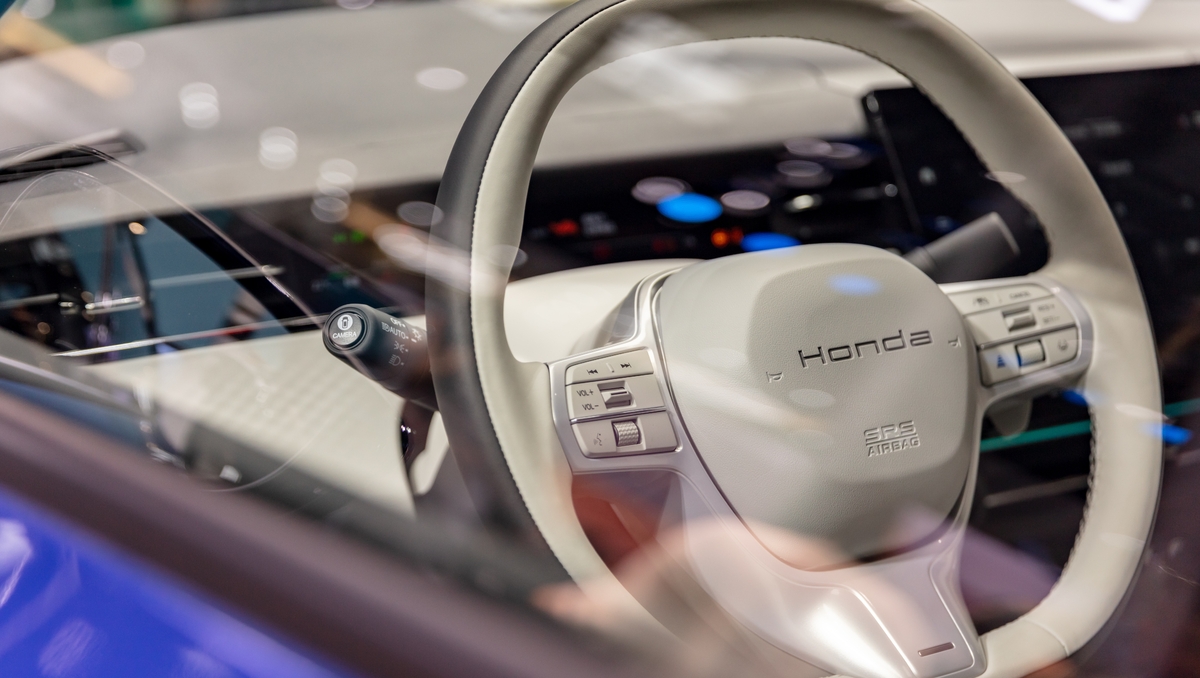
Honda is doubling down on software, positioning onboard AI as its most immediate lever to cut road fatalities and improve everyday driving. Rather than chasing splashy promises, the company is building a pragmatic path that keeps humans firmly “in the loop.” The goal is clear: scale safer, semi-autonomous assistance that ordinary drivers will actually trust.
Safety, not spectacle
Honda’s emphasis is unmistakably safety-first, not autonomy-for-autonomy’s sake. In a market obsessed with full self-driving, the brand chooses disciplined incrementalism and human-centered design. The pitch is simple: reduce crashes now with smarter, reliable assistants that work in messy real-world conditions.
This approach aligns with Honda’s broader strategy, which pairs efficient hybrids with accelerated software and sensing advances. Where others tout sweeping electrification, Honda prioritizes features that save lives regardless of powertrain. Safety, the company argues, should be universal, not contingent on charging infrastructure or regional mandates.
A focused partnership with Helm.ai
To deliver on that promise, Honda has deepened its collaboration with Helm.ai, a California startup specializing in camera-first perception systems. The alliance targets a next-generation Navigate on Autopilot capability designed for highways and complex urban corridors. Crucially, it keeps the driver engaged, requiring continuous attention and clear handoff protocols.
The technical bet is bold: a camera-only stack, without costly LiDAR, tuned for in-car, real-time inference. That architecture is lighter on hardware, more scalable to mainstream models, and easier to maintain via over-the-air updates. If it meets safety thresholds, Honda can push rapid improvements without wholesale sensor redesigns.
Image: © Helm.ai
How the stack could save lives
The core value lies in robust perception, predictive planning, and disciplined control that gracefully handle edge cases. Camera-based AI can fuse temporal clues, reading subtle human intent from body motion, eye lines, and vehicle posture. Done well, it anticipates risky merges, late braking, and erratic maneuvers before they trigger collisions.
Equally critical is high-quality driver monitoring, ensuring the human remains attentive and ready to reassert control. Clear HMI cues, consistent latency, and calibrated intervention thresholds reduce confusion at the worst possible moments. Safety is a system-of-systems discipline, not a single feature you can toggle on and forget.
“Safety is not a feature; it’s a contract between driver and machine—and the car must hold up its end every time.”
What sets Honda’s path apart
- Human-in-the-loop by design, with explicit handoffs and persistent driver engagement.
- Camera-first affordability and scalability, lowering bill-of-materials and deployment friction.
- Continuous software learning and iterative updates, without waiting for new sensor generations.
- Stronger emphasis on edge-case robustness, not just demo-friendly “sunny day” scenarios.
- Integration across hybrid lineups, bringing advanced safety to broader price points.
Timelines, testing, and trust
Honda targets initial rollout around 2027, with prototypes already circulating on internal fleets. The interim focus is structured validation, scenario coverage, and transparent safety metrics. Trust is earned through consistent behavior, not lofty claims or viral demo videos.
Comparisons with Tesla’s Autopilot, GM’s Super Cruise, or Mercedes’ Level 3 Drive Pilot are inevitable. Honda’s stance appears conservative, closer to an enhanced Level 2+ with rigorous driver supervision. In practice, that may yield fewer user surprises and calmer courtrooms, even if it sparks fewer headline superlatives.
Hard problems that still matter
Adverse weather remains a stubborn adversary, degrading camera clarity and road-marking contrast. Handling construction zones, emergency vehicles, and unstructured intersections tests perception and policy layers alike. Regulators will demand auditable evidence that risk is measurably reduced across diverse regions.
Data privacy and onboard compute choices will also shape user acceptance and cost curves. Efficient inference on automotive-grade chips must align with thermal, power, and lifetime constraints. The whole stack must be maintainable for a decade of ownership, not just a product launch window.
The road to 2027 and beyond
Watch for limited pilots, early production signals, and OTA-driven capability expansions. Expect tighter HMI refinements, clearer driver education, and safety-case documentation that moves beyond marketing slides. If Honda closes the loop from prototype to mass adoption, it could reset the industry’s safety bar without chasing fully driverless hype.
The larger message is sobering, yet optimistic. Fewer crashes are achievable with disciplined engineering, sharp AI, and honest, human-centered constraints. If the company delivers, the next wave of semi-autonomous driving may feel less like a gamble—and more like a daily guardian that quietly keeps everyone safer.
