
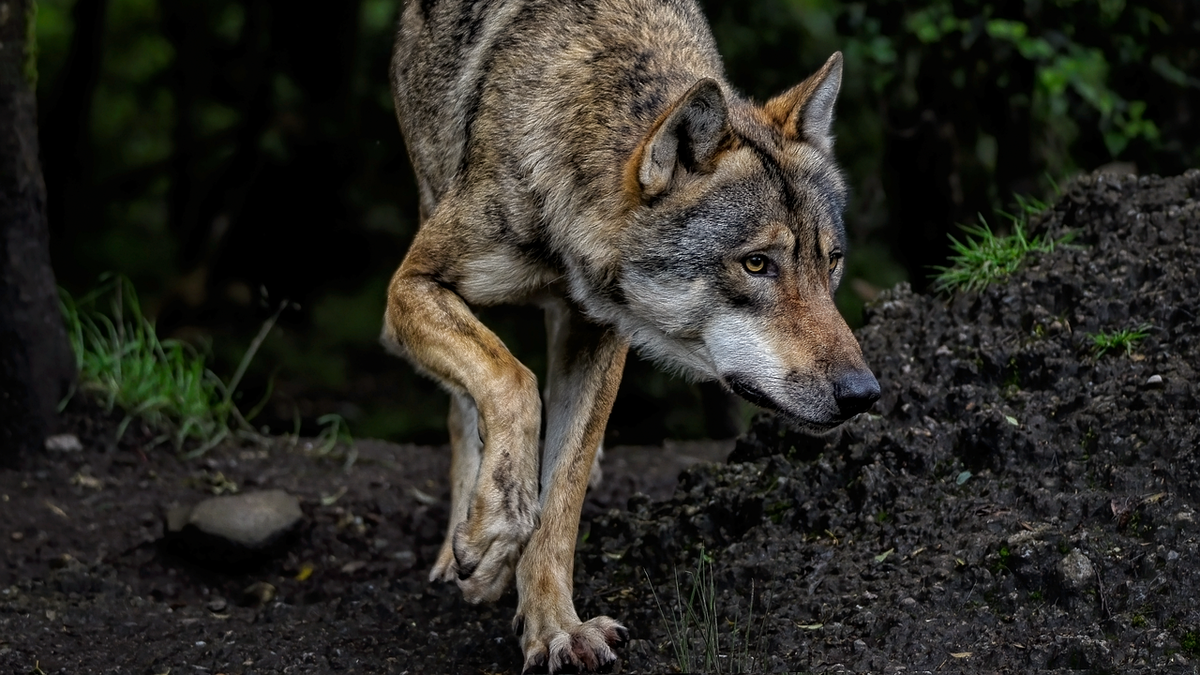
A five-year-old girl on holiday in northern Greece was reportedly attacked by a wild wolf, an unusually rare event that has alarmed local authorities and wildlife groups. The child, a Serbian national, sustained minor injuries and was treated after the animal fled. Officials say the incident underscores a broader concern: some wolves are developing a “problematic familiarity” with humans, a behavior that can increase risks in tourist-heavy areas.
The incident at Neos Marmaras
The encounter occurred near the seaside resort town of Neos Marmaras on the Halkidiki peninsula, a popular destination for summer visitors. According to the environmental NGO Callisto, the animal scratched and bit the girl on the back before retreating, apparently startled by her mother. Greek media reported that the child was “not seriously injured” and has since been stabilized, though the community remains on edge. Authorities and Callisto have begun efforts to locate the wolf, deploying cameras and monitoring paths near the reported site.
- Location: Neos Marmaras, Halkidiki, northern Greece
- Victim: Five-year-old Serbian girl
- Condition: Minor injuries, not life-threatening
- Suspected cause: A young wolf habituated to human presence
- Response: Search operation with cameras and wildlife teams
“Problematic familiarity” explained
Experts describe the attacker as likely a young wolf that has grown overly accustomed to human activity. “It appears to be a young wolf that has developed a kind of problematic familiarity with people, which is unusual,” said Iason Bantios, spokesperson for Callisto. Such behavior can stem from repeated exposure to easy food sources near towns, including unsecured trash or accidental feeding. Over time, bolder animals may test boundaries, erasing the natural wariness that typically keeps wolves away from people.
A rare event in a changing landscape
Wolves in Greece are generally elusive and avoid direct contact with humans, making attacks exceptionally rare. Northern Greece hosts populations of wolves and jackals that roam mountainous habitats just beyond coastal settlements, where tourist traffic can swell seasonally and shift local conditions. Sightings have also been recorded near Mount Parnes, close to Athens, as well as in parts of the Peloponnese. These appearances have rekindled debate over how best to balance urban expansion, tourism, and wildlife conservation.
The search and the community response
Callisto says it has installed cameras in the wider area and is working with authorities to track the animal. Local officials are evaluating whether this particular wolf poses an ongoing risk, a determination that could lead to targeted capture by specialized teams. The aim is to prevent further encounters while avoiding unnecessary escalation against a protected species. Residents and business owners have expressed concern, seeking reassurance that holidaymakers can safely enjoy beaches and trails.
Understanding risk without amplifying fear
Wildlife groups emphasize that coexistence with wolves is both possible and desirable, provided that basic safeguards are consistently applied. Most wolves do not approach people, and sightings rarely lead to incidents. The unusual nature of this case has focused attention on human behaviors that inadvertently invite bold approaches—especially in bustling seaside towns where food waste can become an attractive lure. Officials note that the current priority is locating the individual animal linked to the attack and determining the appropriate intervention.
Conservation context in Greece
Greece’s wolf populations have persisted and, in some regions, recovered due to legal protections and improved habitat connectivity. As wolves recolonize historical ranges, encounters near the fringes of urban and tourist zones occasionally increase. Environmental organizations argue that relocation is not a catch-all solution, particularly when underlying issues like unsecured food sources remain unaddressed. Instead, targeted responses, data-driven monitoring, and careful public communication can reduce conflict while protecting an ecologically important predator.
What comes next
Authorities and conservationists will be monitoring the region around Neos Marmaras in the coming days, assessing camera footage and tracking signs. If the wolf is identified and captured, specialists will evaluate its condition and behavior before determining a course of action in line with national guidelines and animal welfare standards. For now, the episode serves as a stark reminder that even in scenic holiday settings, humans and wildlife share overlapping spaces, and rare anomalies can test that fragile boundary. As one local conservationist put it, “A single incident can define the public mood, but informed measures should define the public response.”
