
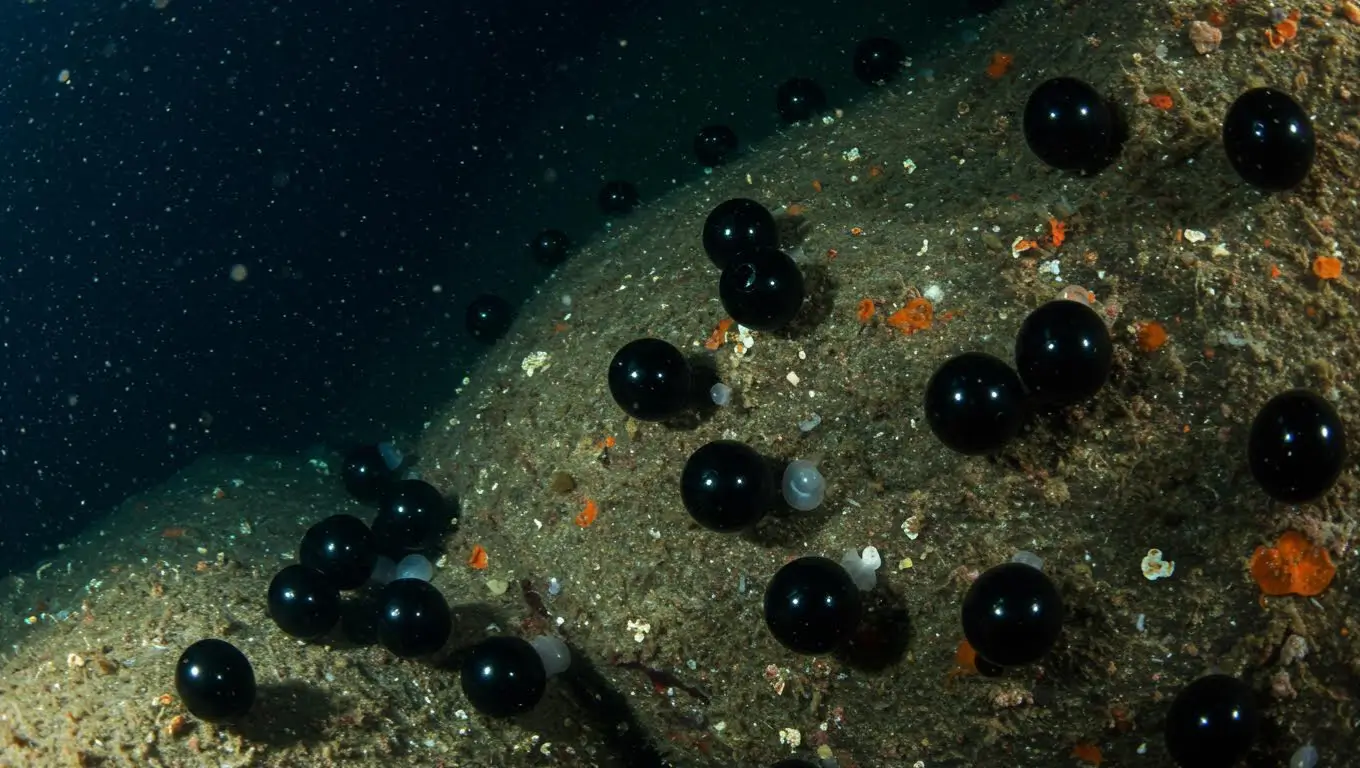
In the Pacific, an unassuming flatworm has rewritten our expectations of deep-ocean life. At more than 6,200 meters, researchers filmed glossy black capsules anchored to bare rock. Inside, up to seven embryos curled in patient silence, proof not just of survival but of reproduction. This record-setting scene pushes open a door on how simple bodies endure impossible environments.
A silent nursery in the hadal zone
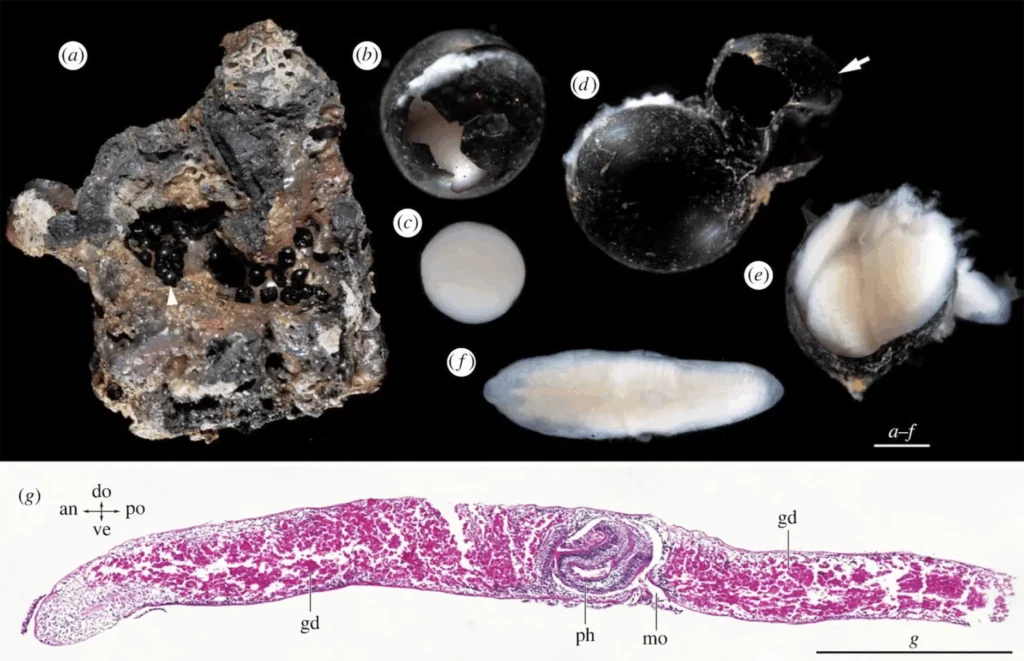
Using a precision ROV, scientists from Tokyo and Hokkaido universities explored the Kuril–Kamchatka Trench. The vehicle’s high-definition cameras spotted four glossy black spheres fixed to wave-scoured rock. What looked like fish eggs were in fact protective flatworm capsules.
Each capsule held up to seven developing embryos of marine triclad flatworms. Under crushing pressure, their bodies showed no exotic anatomical quirks. Their growth mirrored shallow-water relatives, pointing to physiological resilience rather than radical redesign.
“In the darkest waters, evolution often hides in plain sight.” The hadal realm imposes cold, scarcity, and relentless pressure. Yet these embryos follow familiar scripts, proving that stability can be the ultimate adaptation.
Genetics trace a shallow origin
DNA evidence placed the embryos within Maricola, a suborder most common in coastal and estuarine habitats. The genetic signal implies a descent from shallow ancestors that gradually colonized the deep trenches. In other words, today’s hadal dwellers may be yesterday’s shore explorers, equipped with robust but simple toolkits.
This perspective reframes deep-sea evolution as continuity rather than constant novelty. Instead of fashioning dramatic new organs, lineages refine metabolism, membranes, and stress responses. The result is quiet durability: bodies that function across daunting gradients without theatrical reinvention.
The architecture of protection
The capsules’ hard shells and rock-fastened anchors create a slow, protective nursery in a resource-poor world. By bundling several embryos per case, parents trade quantity for shielded quality. In a realm where predators are few but mishaps are many, defense beats speed, and patience trumps prolific spawning.
Their glossy black color may reduce biofouling or absorb scarce heat, though firm tests remain pending. What is clear is the strategy’s elegance: small, sturdy, and exquisitely placed to make the most of passing organic drift.
Why this changes the deep-sea playbook
- It shows that extreme depths can host ordinary developmental programs.
- It supports a shallow-to-deep pipeline for species origins.
- It highlights protective, low-energy reproduction over rapid turnover.
- It validates gentle, ROV-based sampling that preserves fragile structures.
- It urges caution as industries eye deep-sea mining, where small disturbances can erase rare nurseries.
Non-destructive exploration and the road ahead
Past trawls shredded delicate organisms, turning mysteries into drifting debris. By using soft grippers and live imaging, the team retrieved intact capsules and clear developmental snapshots. This approach unlocks behavior without sacrificing vulnerable specimens, a standard the field should boldly adopt.
Next steps include targeted environmental DNA surveys to map relatives across trenches. Lab simulations of pressure, temperature, and chemistry could pinpoint the physiological levers that keep embryos stable. With each careful dive, we glimpse a deeper truth: even in perpetual night, life prefers continuity over spectacle, and patience over panic.
