
Indoor harvesters ready for a hyperconnected world
As billions of devices join the Internet of Things, reliable indoor power becomes a pressing need. A new perovskite cell engineered by an international team promises a dramatic leap in efficiency under ambient light, delivering output that is roughly six times higher than many conventional indoor photovoltaics. This breakthrough aligns elegantly with the way homes and offices are actually lit, turning everyday illumination into a steady trickle of energy.
The triple-passivation idea
The core advance is a meticulous “triple passivation treatment,” or TPT, that repairs and stabilizes the perovskite’s microscopic defects. The recipe blends three targeted chemicals—RbCl, DMOAI, and PEACl—each addressing a different source of loss. Together they smooth crystal growth, lock halide ions in place, and prevent segregation that degrades optoelectronic performance.
Lead author Siming Huang captured the concept with a vivid analogy:
“Crystal defects can be like a cake cut into pieces; our passivation strategy helps ‘glue’ the cake back together so charges can move freely.”
By tightening the lattice and calming ion motion, the film passes charges with fewer traps and less noise, especially under low-intensity light.
A bandgap tailored for rooms, not rooftops
Unlike outdoor silicon modules optimized for sunlight, the team chose a perovskite composition—FA0.64MA0.36Pb(I0.64Br0.36)3—with a finely tuned bandgap of about 1.75 eV. That bandgap aligns with the spectra of LED and fluorescent lighting, maximizing the probability that absorbed photons become useful current. In short, the material is designed to excel exactly where indoor devices actually live.
Under a 1000 lux test—typical of well-lit interiors—the device reached a 37.6% power conversion efficiency. Compared with many silicon or dye-sensitized options that struggle in single-digit indoor percentages, the gain is striking. For compact electronics, it can mean smaller surfaces, longer lifetimes, or outright battery elimination.
Stability that keeps pace with performance
High efficiency means little if materials fade under heat, humidity, or constant illumination. Here, the triple-passivated cells also proved impressively robust. After 3,200 hours of storage in controlled ambient conditions, the devices retained about 92% of their initial output. A comparable, non-passivated control kept only 76%, indicating that the TPT chemistry protects both interfaces and the perovskite bulk.
In accelerated light soaking at 55°C for 300 hours, the TPT device held 76% of its starting efficiency, while the untreated version dropped to 47%. This resilience suggests that carefully engineered passivation can tackle the twin challenges of ion migration and defect growth that typically plague perovskite films.

What it unlocks for designers and product teams
The immediate beneficiaries are low-power, always-on devices. With a higher indoor energy budget, makers can reduce battery sizes, slow replacement cycles, or power nodes entirely from ambient light. That translates into less maintenance, fewer dead batteries, and a smaller footprint.
- Smart sensors for homes, factories, and buildings without frequent battery swaps.
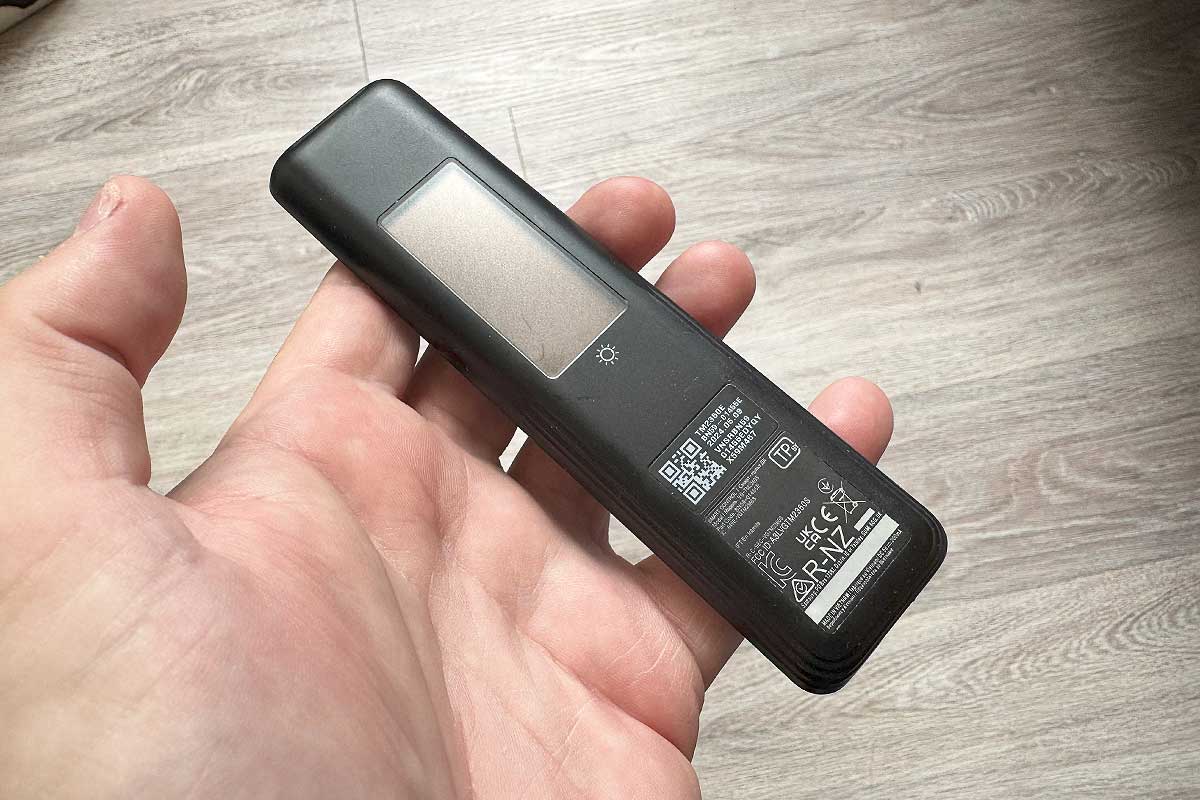
- Remote controls, keyboards, and peripherals that trickle-charge under room light.
- Beacons and asset trackers in retail and logistics with simplified power design.
- Security detectors and alarm accessories that remain reliable during long standby.
- Health and wellness devices that favor thin, flexible form factors.
For products built at scale, fewer batteries mean measurable reductions in lifetime cost and environmental impact. In a world headed toward hundreds of billions of deployed nodes, shaving even a few grams of battery mass per device compounds into a meaningful global benefit.
Why this approach stands out
Many indoor PV efforts trade efficiency for stability, or vice versa. The triple-passivation strategy demonstrates that judicious, synergistic chemistry can deliver both, preserving carrier lifetimes while suppressing parasitic pathways. The result is a device that not only performs under dimmer spectra but also resists the slow drift that erodes real-world returns.
Equally important, the material choices—RbCl for uniform crystal growth, DMOAI and PEACl for halide stabilization—are grounded in mechanisms that can guide further iterations. That makes the work a potential template for tuning other perovskite stacks for specific indoor ecosystems.
What’s next
To move from lab to market, researchers will refine scalable processing, assess long-term reliability across humidity and temperature ranges, and integrate cells into real devices with diverse lighting profiles. Partnerships with component suppliers and ODMs can accelerate testing in form factors such as smart tags, keypads, and compact hubs. With each iteration, the goal is simple: turn everyday lighting into dependable, maintenance-free power.
If momentum continues, the quiet revolution won’t happen on rooftops but inside the spaces where we work and live. The lamp above your desk could soon be the most convenient, invisible charger you’ll ever own.